The Right Height for Outdoor CCTV Cameras (and Why It Matters)
- William Turner
- Dec 18, 2025
- 9 min read
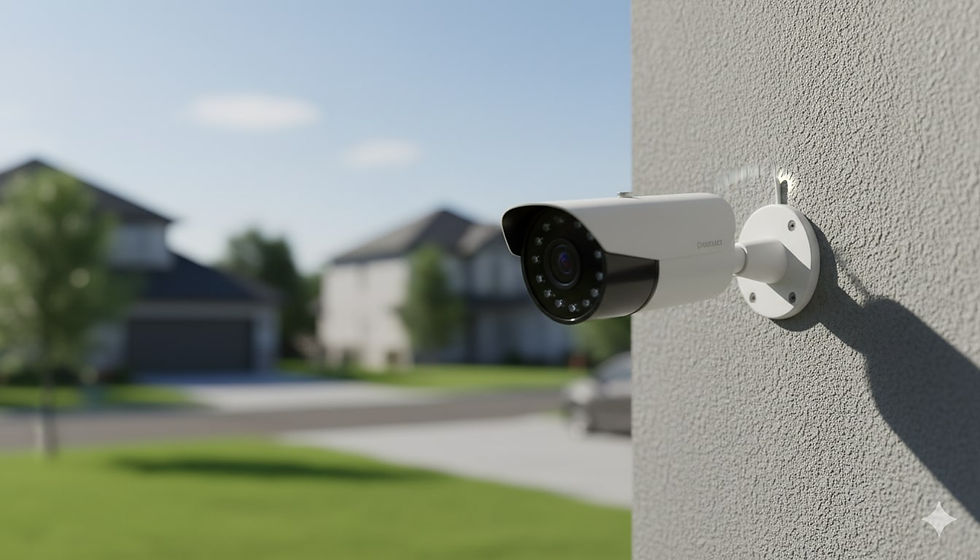
When it comes to CCTV installation, one of the most frequently overlooked aspects is camera height. Many property owners invest in high-quality security cameras only to compromise their effectiveness through poor CCTV placement. The height at which you position your cameras can mean the difference between capturing crystal-clear footage of an intruder's face and recording nothing more than the top of their head.
In this comprehensive guide, we'll explore the optimal heights for outdoor CCTV positioning, explain why these measurements matter, and share professional insights to help you maximise your security system's effectiveness.
Why Camera Height Is Critical to Security
Before we delve into specific measurements, it's essential to understand why CCTV placement height deserves careful consideration. The height of your security cameras affects several crucial factors:
Facial Recognition and Identification
The primary purpose of most security cameras is to identify individuals. Cameras mounted too high will capture overhead angles that obscure facial features, rendering the footage less useful for identification purposes. Conversely, cameras positioned too low become vulnerable to tampering and may capture too narrow a field of view.
Field of View and Coverage Area
Camera height directly influences how much area your system can monitor. The wrong height can create blind spots, leave vulnerable areas unprotected, or result in wasted coverage of irrelevant spaces like empty sky or ground immediately beneath the camera.
Deterrent Effect
Visible security cameras serve as powerful deterrents to potential intruders. However, cameras must be positioned where they're noticeable to passers-by whilst remaining difficult to disable. This balance is largely determined by installation height.
Protection from Vandalism and Tampering
Cameras mounted within easy reach invite tampering, vandalism, or theft. Proper CCTV positioning places cameras high enough to discourage interference whilst maintaining their effectiveness for surveillance.
The Optimal Height Range: 2.5 to 3 Metres
For most outdoor residential and commercial applications, the ideal height range for CCTV installation is between 2.5 and 3 metres (approximately 8 to 10 feet) from the ground. This range has become the industry standard for several compelling reasons.
At this height, cameras sit comfortably above the reach of most individuals, making casual tampering difficult without a ladder or similar equipment. The elevation provides an excellent vantage point for capturing facial features of people standing or walking at ground level, as the downward angle remains shallow enough to record faces clearly rather than just the tops of heads.
This positioning also offers a practical field of view that balances ground-level detail with reasonable coverage area. Most standard CCTV cameras, when mounted at this height, can effectively monitor entryways, driveways, gardens, and other key areas without excessive distortion.
Adjusting Height Based on Specific Applications
Whilst 2.5 to 3 metres serves as an excellent baseline, certain situations call for adjustments to this standard.
Monitoring Entry Points
For cameras focused on doorways, gates, or other entry points where you need clear facial identification, consider positioning cameras at the lower end of the range, around 2.5 metres. This height, combined with a slight downward tilt, provides the optimal angle for capturing faces as people approach or enter.
For double doors or taller entry points, you might position cameras slightly higher, but be mindful that increasing height beyond 3 metres begins to compromise facial detail. If covering a tall entrance, consider using cameras with adjustable lenses or varifocal capabilities to compensate for the additional height.
Perimeter Monitoring and Wide Coverage
When your goal is to monitor large open areas such as car parks, building perimeters, or expansive gardens, cameras may be positioned higher, ranging from 3 to 4.5 metres. At these heights, cameras can survey broader areas, though you'll trade some facial detail for increased coverage.
For perimeter monitoring, the priority shifts from identifying specific individuals to detecting movement, monitoring overall activity, and recording general events. The higher positioning also makes cameras more visible from a distance, enhancing their deterrent value.
Low-Level Monitoring
In certain scenarios, such as monitoring valuable ground-level equipment, bicycle storage areas, or specific vulnerable points, cameras may need to be positioned lower than the standard range, perhaps as low as 1.8 to 2 metres. However, these installations should include protective housings to prevent tampering and should ideally be complemented by higher cameras that provide backup coverage.
The Angle of Installation: Complementing Height
Camera height doesn't work in isolation. The angle at which you tilt your camera is equally important and must complement your chosen height for optimal results.
Most CCTV installations benefit from a downward tilt between 15 and 30 degrees from horizontal. This angle range, combined with the recommended 2.5 to 3-metre height, creates the ideal capture zone for facial features whilst maintaining adequate area coverage.
A camera mounted at 2.5 metres with a 20-degree downward tilt will capture excellent facial detail of someone standing 2 to 3 metres away from the mounting point. As the distance increases, faces become less detailed, but overall body features and clothing remain identifiable up to 6 or 8 metres away, depending on your camera's resolution and lens quality.
Avoid tilting cameras too steeply downward. Angles exceeding 45 degrees typically result in top-of-head footage that's less useful for identification. Similarly, cameras angled too shallowly may capture excessive sky or background whilst missing ground-level activity.
Common CCTV Positioning Mistakes to Avoid
Even with knowledge of optimal heights, several common errors can undermine your CCTV installation.
The "Out of Reach" Misconception
Some property owners position cameras excessively high, believing this makes them more secure. Whilst cameras at 4 or 5 metres are indeed difficult to reach, they're often too high to capture useful facial detail. Remember, the goal isn't simply to place cameras beyond reach, but to capture usable footage whilst maintaining reasonable security from tampering.
Ignoring Lighting Conditions
Camera height must account for lighting conditions throughout the day and night. Cameras positioned too high may point directly into setting or rising sun, creating glare that obscures footage. Similarly, artificial lighting from street lamps or security lights can create backlighting issues if camera height and angle aren't carefully considered.
When planning your CCTV placement, observe your property at different times of day and consider how light sources will affect cameras at various heights and angles.
Neglecting Maintenance Access
Cameras require periodic cleaning and maintenance. Positioning cameras at heights that require specialised access equipment makes routine maintenance burdensome and expensive. The 2.5 to 3-metre range allows maintenance from a standard stepladder whilst keeping cameras reasonably secure.
Creating Blind Spots
Camera height significantly affects the area immediately beneath the mounting point. Cameras create a blind spot directly below them, with the size of this blind spot increasing with height. At 2.5 metres, this blind spot is manageable and can be covered by overlapping fields of view from multiple cameras. At 4 metres or higher, the blind spot becomes substantial.
When designing your CCTV installation, map out each camera's coverage area and blind spots to ensure comprehensive monitoring without gaps.
Practical Installation Tips for Optimal Height
Once you've determined the ideal height for your specific needs, proper installation technique ensures your cameras perform as intended.
Use Proper Mounting Hardware
Quality mounting brackets designed for your specific camera model are essential. These should be securely attached to solid structural elements, not merely fixed to cladding or weak materials. At 2.5 to 3 metres, cameras experience wind loading and weather exposure that inadequate fixings cannot withstand.
Consider Cable Management
Cables should be concealed or protected wherever possible, particularly in the vulnerable area between ground level and the camera. Use conduit or trunking to protect wiring and maintain the professional appearance of your installation.
Account for Camera Housing
Outdoor CCTV cameras typically require weatherproof housings that add bulk to the overall installation. Ensure your mounting height accounts for the complete assembly, including housing, so the lens sits at the optimal height rather than the mounting bracket.
Test Before Final Installation
Before permanently fixing cameras at height, test the positioning. Many installers use temporary mounting or adjustable brackets to verify coverage, angles, and image quality before completing the installation. This approach prevents costly repositioning later.
Special Considerations for Different Property Types
The optimal CCTV positioning varies slightly depending on the type of property you're securing.
Residential Properties
For homes, the standard 2.5 to 3-metre height works exceptionally well. Focus cameras on entry points, driveways, and vulnerable ground-floor windows. Consider privacy regulations and avoid positioning cameras where they might overlook neighbouring properties.
Residential CCTV installation should balance security with aesthetics. Cameras at the recommended height are noticeable enough to deter intruders whilst not dominating the property's appearance.
Commercial and Retail Premises
Commercial properties often benefit from a combination of heights. Entry points should have cameras at the standard 2.5 to 3-metre range for identification purposes, whilst perimeter and car park cameras may be positioned higher for broader coverage.
Retail locations might require lower positioning in some areas to capture detailed footage of customer interactions or potential shoplifting, though these should be complemented by higher overview cameras.
Industrial and Warehouse Facilities
Industrial settings sometimes require cameras at greater heights due to the scale of buildings and the need to monitor large open areas. In these cases, using high-resolution cameras with appropriate lenses becomes crucial to maintain image quality despite increased distance.
Combine high-mounted perimeter cameras with lower cameras at specific vulnerability points such as loading bays, equipment storage areas, and access gates.
Technology Considerations That Affect Height Decisions
Modern CCTV technology influences optimal positioning in several ways.
Resolution and Image Quality
Higher resolution cameras can be positioned slightly higher than lower resolution models whilst maintaining facial identification capability. A 4K camera at 3.5 metres might capture the same detail as a 1080p camera at 2.5 metres. However, don't use superior technology as an excuse for poor positioning. Even the best cameras perform optimally within the recommended height range.
Lens Type and Focal Length
Varifocal or zoom lenses provide flexibility in CCTV placement by allowing you to adjust the field of view after installation. Fixed lens cameras require more precise height and angle positioning during installation, as these cannot be adjusted later.
Wide-angle lenses are more forgiving of height variations for general monitoring, whilst telephoto lenses require precise positioning and work best when focused on specific targets from the standard mounting height.
PTZ Cameras
Pan-tilt-zoom cameras offer unique positioning possibilities. These can be mounted higher than standard cameras, typically between 3.5 and 5 metres, as their ability to zoom compensates for increased height. However, ensure the mounting height still allows the camera to tilt downward sufficiently to monitor ground-level activity when needed.
Compliance and Legal Considerations
When planning your CCTV installation height, legal and regulatory compliance deserves attention.
Data protection regulations require that cameras monitor only your property and do not unreasonably overlook neighbouring properties or public spaces beyond your boundary. Camera height and angle must be carefully controlled to ensure compliance.
Higher mounting positions may inadvertently capture more of neighbouring properties or public areas than necessary. The standard 2.5 to 3-metre height, with appropriate angling, typically keeps coverage within acceptable boundaries whilst still providing effective security.
Some jurisdictions have specific requirements regarding signage when CCTV is in operation. Ensure any required signs are visible to those entering monitored areas, which may influence camera positioning to some degree.
Creating a Comprehensive CCTV Installation Plan
Optimal camera height is just one element of effective CCTV positioning. A comprehensive security camera installation should consider the interaction between multiple cameras at various heights.
Begin by conducting a security assessment of your property, identifying vulnerable points, valuable assets, and areas requiring monitoring. For each location, determine whether the priority is facial identification, general activity monitoring, or deterrence, as this influences the ideal height.
Map out camera positions, fields of view, and coverage areas, noting any overlaps and blind spots. This planning phase often reveals that a combination of heights provides the most effective coverage, with some cameras at the standard 2.5 to 3-metre height for detailed monitoring and others positioned higher for broad overview coverage.
Consider lighting, both natural and artificial, and how it interacts with cameras at different heights throughout the day and night. Plan camera positions that avoid backlit situations where possible, or specify cameras with wide dynamic range capabilities for challenging lighting positions.
Conclusion: Height Matters More Than You Think
The height at which you mount your outdoor CCTV cameras fundamentally affects your security system's effectiveness. The industry-standard range of 2.5 to 3 metres from ground level provides an optimal balance between security from tampering, facial identification capability, field of view coverage, and practical maintenance access.
Whilst specific applications may call for variations from this standard, understanding the principles behind optimal CCTV positioning allows you to make informed decisions about your security camera installation. Consider your specific security needs, the areas you need to monitor, the level of detail required in captured footage, and practical factors like lighting and maintenance access.
Proper CCTV placement, beginning with appropriate height selection, transforms your security cameras from passive recording devices into active elements of your property's protection strategy. Take the time to plan camera positions carefully, and don't hesitate to consult with professional installers who can assess your property and recommend optimal positioning for each camera in your system.
Remember, the goal isn't simply to install cameras, but to create an effective surveillance system that captures the footage you need when you need it. Start with the right height, adjust for your specific circumstances, and you'll maximise the return on your security investment.


Comments